Week 6 of 42
Training week: August 17 to 23, 2026
I missed the third swim I had planned. Four days later, I ran the fastest 5K of my life and discovered that the routine was beginning to travel with me.
I ran the fastest 5K of my life on Saturday morning.
My reward was finishing several minutes behind both of my children.
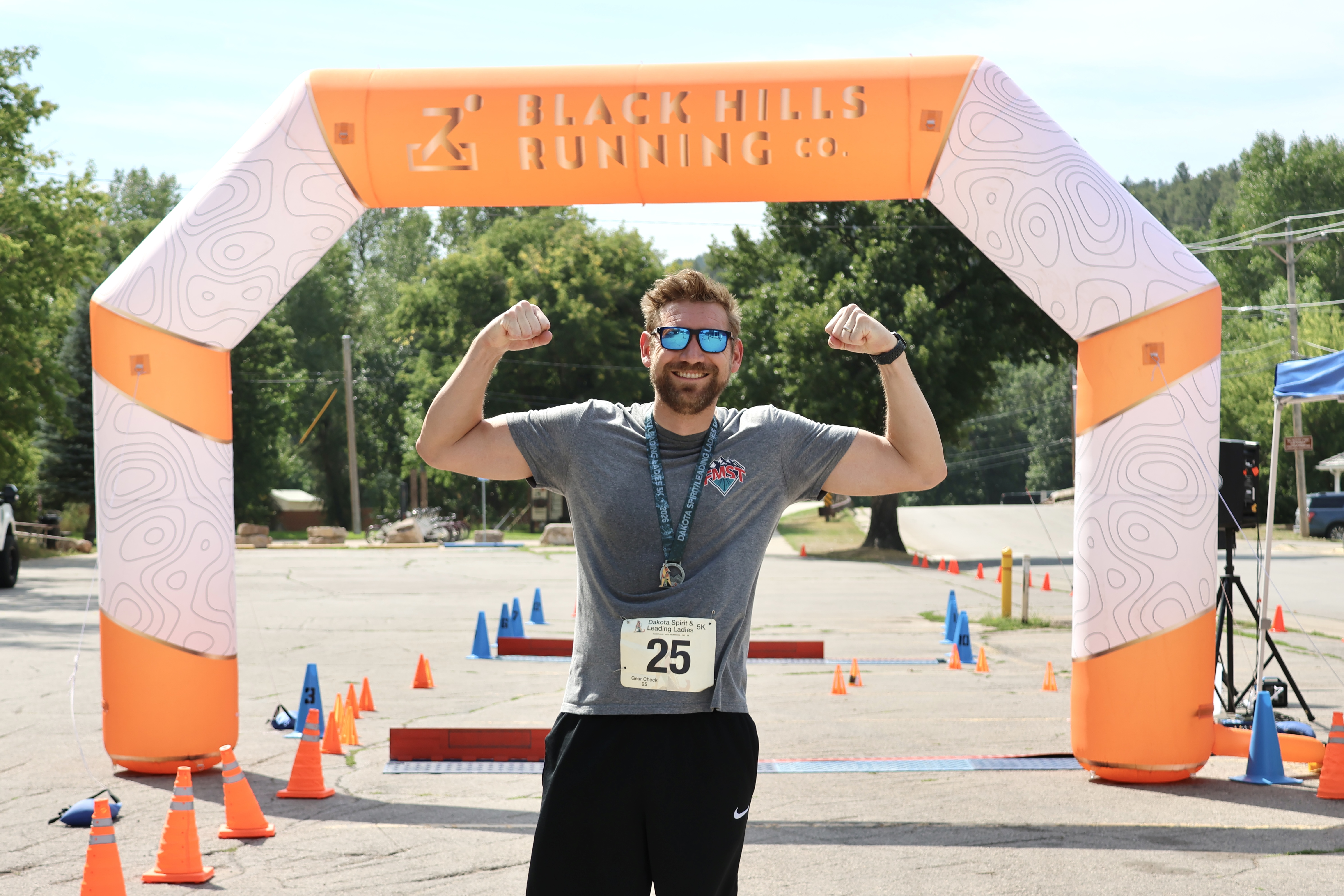
My son won the race in 18:09. My daughter finished third overall in 19:52. By the time I crossed the line in 25:37, almost two minutes faster than my previous best, both kids had finished long ago. They were waiting beside my wife, who stood near the finish line taking photos.
For once, I hadn’t spent the race standing near the finish line and watching the rest of my family compete.
I had joined them.
I knew the week would end with a 5K. I did not expect it to end with a personal best or with the feeling that I had finally stepped into a family tradition I had spent years supporting from the sidelines.
Four days earlier, I had been focused on a different result. I had awakened Wednesday morning intending to complete my third swim of the week but had gone back to sleep instead. At the time, that felt like failure.
What happened between Wednesday and Saturday changed how I understood the missed swim. Consistency did not require every workout to happen exactly as written. It required the larger purpose of the plan to survive when the plan itself had to change.
The runner in the family
Running has shaped my family for nearly two decades, but most of that story belongs to my wife.
Katie ran her first marathon in Chicago in 2007 after an injury derailed her final college track and cross-country seasons. She entered the race looking for redemption and a new way to pursue the sport she loved. Despite having never attempted 26.2 miles, she finished in a very respectable 4:09.
After that first marathon, she set an ambitious new goal: qualify for the Boston Marathon. At the time, women in her age group needed to run 3:40 or faster. She returned to Chicago in 2008 with more experience and a full year to prepare, then finished in 3:37. In one year, she had dropped more than 30 minutes and earned her place at the 2009 Boston Marathon.
Our trip to Boston became our first out-of-state marathon adventure. After experiencing the race and exploring the city together, Katie began imagining an even larger goal: run a marathon in every state. Eventually, that goal became finishing each one in under four hours.
She has since completed 32 states and 30 of them under four hours. Our children began joining the trips as soon as they were old enough to race, first in kids’ events and later in 5Ks and other distances. Running across the country has become part athletic pursuit, part family tradition, and part excuse to explore places we might never otherwise visit.
I am usually the swimmer waiting at the finish line.
The Leading Ladies Marathon in Spearfish, South Dakota, changed that. Its 5K required runners to take a bus to a starting point three miles away and run back to the finish. Our kids are 10 and 13, so one of us needed to accompany them to the start. Katie had a downhill marathon the following morning and wisely declined to add another downhill race to her legs.
That left me.

I had run a 5K with the family on July 4, but swimming, biking, and lifting had accounted for most of my training since then. I had no expectation of keeping up with either child. My job was to get them to the start, run somewhere behind them, and eventually catch up if either needed help.
Before we could reach race day, I still had a swimming week to complete.
The injury that was not there
Monday morning began with the familiar sensation near the place where I had injured my serratus the previous December.
It wasn’t pain. I couldn’t identify anything actually wrong. I was simply aware of the spot, and awareness was enough to make my mind begin asking questions.
Was this how the injury started last time? Should I skip practice? Was getting into the pool worth the risk?
I eventually decided that general soreness from prior workouts and my desire to remain in bed were more likely explanations. So I went to the pool.
Once I entered the water, the sensation almost disappeared. The main set included eight 200s with groups of stroke 50s between them. I started the 200s at around 2:20 and descended to approximately 2:05, close to the pace I’d need to hold to meet my 1,000 goal.
During two of the 200s, I was given the option to pull with paddles. I had avoided them since returning because the extra resistance places more strain on the upper body, exactly where I remained most cautious. Monday felt like the right time to test them. I put the paddles on, completed both 200s, and felt no pain. The absence of a problem did not eliminate every concern, but it gave me another piece of evidence that the old injury was no longer controlling what I could do.
I also swam the assigned butterfly instead of replacing it with backstroke as I often have in the past. It was only three 50s, but it was three more than I normally would have attempted.
Later that day, I completed my physical-therapy exercises and a general lifting session in the home gym.
My chest felt fine. I was beginning to understand that returning from injury might require more than rebuilding the muscle. I also had to rebuild trust in a part of my body that had once betrayed me.
Listening to my body couldn’t mean treating every remembered sensation as a new injury. It meant paying attention, looking for actual pain, and continuing to do the work that kept me healthy.
The old sprinter answers
The sensation was present again Tuesday morning, but this time I dismissed it more quickly and went to practice.
I’m glad I did.
Tuesday was a sprint workout built around 50s at 90 and 100 percent effort. In college, the 50 and 100 freestyle were my primary events. As a Masters swimmer, I have moved toward longer races because sustained speed has felt easier to access than the explosive sprinting I once relied on.
The old sprinter is still there. He just needs a reason to emerge.
One of my teammates had brought his 17-year-old son to practice. He’s a state qualifier, a strong swimmer, and was training a few lanes away with his father.
At some point, without a word or acknowledgment, we began racing.
That happens in swimming. You notice someone nearby increasing the effort. You respond. They respond again. Neither person needs to announce that a race has begun.
I tried to preserve my form instead of flailing after every hundredth of a second, but I couldn’t resist trying to win each 50. A stronger kick lifted my body higher in the water. I fought the urge to breathe as the wall approached. I finished each repeat gasping, watched the clock, and prepared to do it again.
He won some. I won some.
I held approximately 28 seconds during the 90-percent efforts and averaged 26 seconds when we were asked to go all out. A few times, I even saw 25.
My fastest Masters 50 is 21.65. My lifetime best is 20.45. Hitting 25 seconds in practice remains far from either time, but holding 26s in August, only six weeks into this journey, told me that I still had speed available.
It also allowed a dangerous and exciting question into my mind.
Could I ever see 20-point-something again?
In the locker room, I thanked the teenager for pushing me.
“No problem,” he said. “Same to you, but I think you took more than I did.”
I had not imagined the race. He had seen me too.
The next generation was approaching practice exactly as my generation had. Every workout was another opportunity to challenge someone.
The swim I didn’t complete
My plan was to swim Monday, Tuesday, and Wednesday before leaving for South Dakota.
Wednesday morning, my alarm went off, and my body wanted no part of it.
My arms were tired. My legs were tired. I was tired. I hit snooze and began negotiating.
Two swims satisfied my minimum for the week. A third consecutive day might be excessive. I had more than seven hours of driving ahead of me. Another hour or two of sleep might be the more useful choice.
Swimming lost the negotiation.
When I finally got out of bed, I was disappointed. Chasing my limit would require more than two swims most weeks, and I didn’t know how much additional exercise the trip would allow beyond Saturday’s 5K.
I still needed to pick up the rental car we’d reserved for our road trip. The rental location was approximately three miles away, and I had planned to ride my bike there after swimming.
Instead of taking the direct route, I detoured through a local park and completed several hard laps around a pond. By the time I reached the rental counter, I was dripping sweat and had turned a three-mile errand into an eight-mile intense ride.
I had missed the swim. I had not missed the opportunity to train.
Not every workout had to match the original plan. The intention behind the plan could survive even when the workout changed.
I drove to South Dakota without the guilt of having allowed the morning to disappear entirely.
We reached the hotel around 9 p.m. After unloading, eating, and getting my family settled in, it was approximately 10:30.
The hotel had a well-equipped fitness center. I used its heavier dumbbells, removed most of the rest I would normally take between sets, and compressed a hard workout into 20 minutes.
Then I went to bed.
Thursday belonged to Mount Rushmore, our hotel waterpark, and an evening lighting ceremony at the monument. I didn’t complete a formal workout, nor did I need to.

This pursuit cannot require exercise to take precedence over everything else I love. It requires me to train seriously on days when training fits, so I can be fully present when something else matters more.
Three races on one highway
Friday, I joined my kids for their pre-race shakeout. They ran a mile and then completed a series of short strides. I struggled to keep up during the mile, but the shorter sprints gave me an opportunity to push them.
Saturday morning, the three of us boarded a bus at the 5K finish line. It carried roughly 50 runners into the Black Hills and dropped us beside a highway.
There was no elaborate starting area. The road remained open to traffic. We were instructed to stay inside the white line on the shoulder.

My kids wore their cross-country jerseys and lined up near the front. Other runners asked about their goals. Both were targeting times under 20 minutes. My previous best was 27:26.
When the race director said, “Ready, set, go,” my children immediately separated from most of the field.
I started faster than intended and completed the first mile in 7:54. The downhill course helped the pace, but the slanted shoulder punished my shins, and the descent increased the strain on my legs.
During the second mile, I could no longer see either of my kids. My shins hurt badly, and walking became increasingly tempting. I had fulfilled my responsibility by getting them to the start. If something happened, I would eventually reach them.
But the first mile had given me a chance at achieving a great finish time.
I may not consider myself a runner, but I do consider myself a competitor. Even when nobody else is involved, I have difficulty walking away from a race against myself.
I completed the second mile at an 8:43 pace and began calculating. If I kept the final mile below 10 minutes, I would set a personal best.
At 2.5 miles, the course left the highway and entered a flatter local trail. Sensing the finish ahead gave me enough energy to increase the pace. I completed the final mile in 8:28 and crossed the line in 25:37.
The personal best came with a cost. By the end of the race, my shins were burning, and the downhill pounding had worked my quads far differently than swimming or cycling. I was proud of the time, but I also knew my legs would remind me of it for several days.
My family was waiting
That reversal mattered almost as much as the time. On most marathon weekends, I am the person holding jackets, checking results, and watching everyone else cross the line. This time, my wife was taking my finishing photos, my children were waiting for me, and all three of us had performances worth celebrating. I hadn’t simply accompanied them to another race. I had become part of the shared experience.
My son’s 18:09 earned the overall victory and a massive personal best. My daughter’s 19:52 placed her third overall and gave her a large personal best of her own.
I had run nearly two minutes faster than ever before and finished eighth overall. The field was small, but 25:37 was a respectable time. I hadn’t merely completed the distance. I had raced it.
Seeing the time made me genuinely happy. In previous 5Ks, I had felt like a swimmer temporarily pretending to be a runner. This time, I felt like a real runner. My kids seemed to see the difference too. They knew what it looked like to participate in a race, and they knew what it looked like to compete. For the first time, they appeared to respect not only that I had finished, but how I had finished.
Running was not about to replace swimming as my sport, but the result still gave me evidence that my fitness was responding to the work and that I could step into my family’s world as more than just a spectator.
If the work I’ve done thus far could produce a personal best in a sport I barely trained for, what might it eventually produce in the sport I knew?
The athlete my children could see
The following morning, Katie completed another part of her own pursuit. She began more than 6,000 feet above sea level and descended approximately 2,500 feet over the marathon. Her race followed the same slanted shoulder along the mountain highway, but for far longer than mine had. Still, she finished in 3:53, making South Dakota her 33rd state and 31st completed in under four hours.
Her consistency has shaped our family. Our children grew up watching her train and learning that difficult goals could become normal parts of life.
Her example is also what helped bring me back to swimming.
When my daughter was six, she was already starting to outrun me. At one point, she asked why I wasn’t “an athlete like Mom.”
I knew I had athletic accomplishments in my past, but she had never seen them. To her, they were stories about someone I used to be.
Returning to the pool allowed my kids to see that part of me. Watching me race and win helped them understand why swimming had once defined so much of my life. More importantly, it allowed me to demonstrate the same kind of commitment they had always seen from their mother.
In South Dakota, I joined them in their sport. I didn’t merely transport them to the start or congratulate them at the finish. I raced too.
I was nowhere near their speed, but that was not the point.
I was part of the action, the effort, and the celebration.
The routine comes home
We drove seven hours back to Denver Sunday afternoon and arrived home around 9 p.m.
After unloading the car and getting everyone settled, I felt restless from sitting all day. I went down to my home gym for 30 minutes of physical therapy and lifting.
That final workout brought the week to eight formal sessions.
Training snapshot
- Swims
- 2
- Swim yardage
- 7,000
- Strength and PT sessions
- 3
- Bike rides
- 1
- Bike distance
- 8 miles
- Runs
- 2
- Run distance
- 5.2 miles
- Total workouts
- 8
I had spent two days driving more than seven hours, stayed in a hotel for four nights, visited Mount Rushmore, played with my family at a waterpark, supported my wife’s marathon, and raced with my children.
I had also preserved my swimming minimum, discovered some early-season speed, completed three strength sessions, turned an errand into a bike workout, and ran a personal best.
Wednesday’s missed swim still mattered. Two swims would not be enough to reach my ultimate goals if it became my normal weekly volume.
But missing one planned workout no longer meant the week had failed.
The routine was becoming flexible enough to survive real life without requiring real life to stop.
The next week would bring another work trip, two customer golf events, legs still carrying the effects of the downhill 5K, and a shoulder beginning to ask for attention.
I was not planning to stop training or deliberately retreat from the work I needed.
The question was no longer whether I would keep training. It was how much work I could fit around travel, golf, fatigue, and a shoulder I could not completely ignore.
Follow Chasing My Limit
Follow this 42-week journey to the 2027 USMS National Championships. Subscribe to receive the next chapter when it is published.

Leave a Reply