Week 10 of 42
Training week: September 14 to 20, 2026
A distant goal can remain a fantasy forever. Getting closer creates a different danger: suddenly, there’s something to lose.
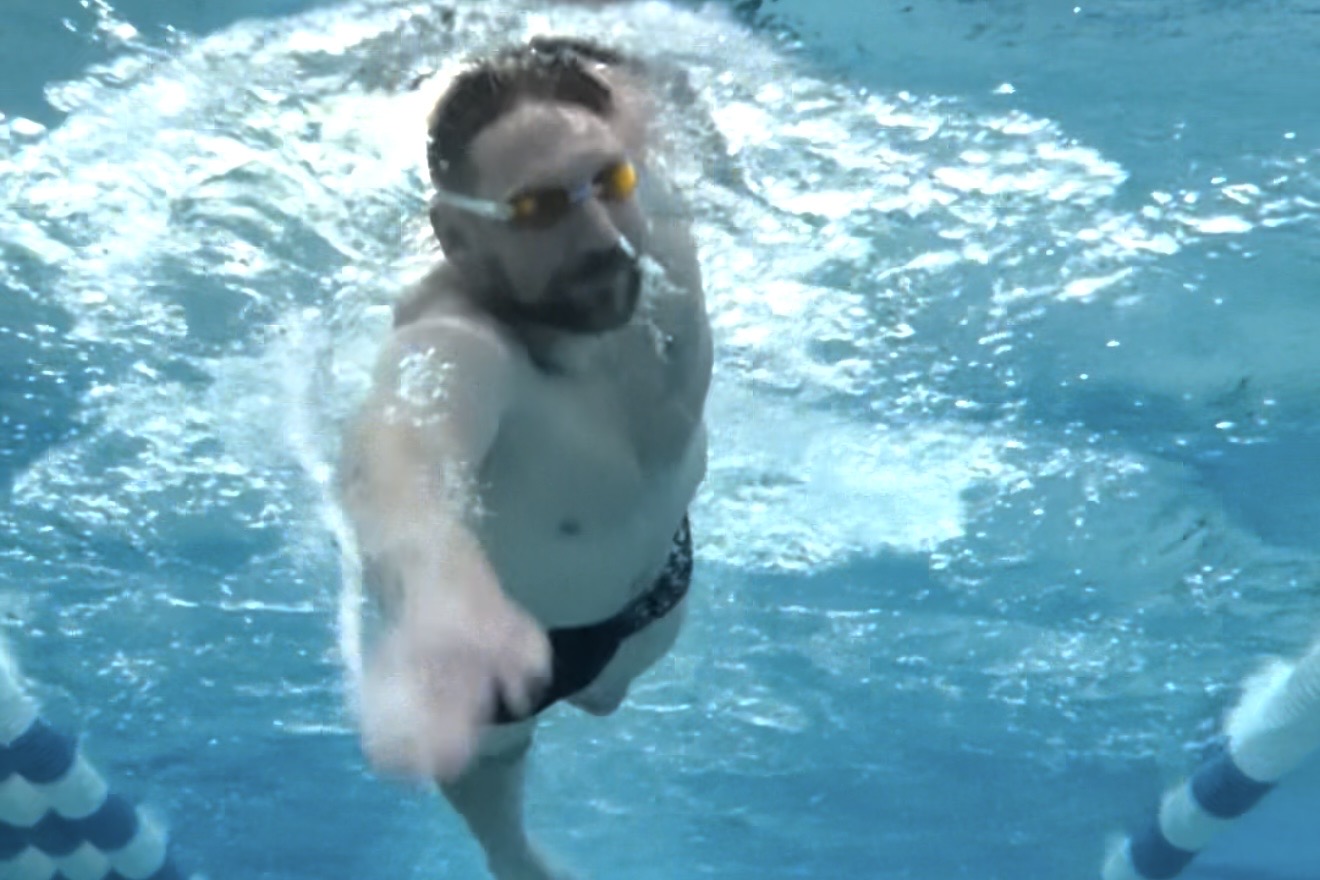
I finished the 1,000, touched the wall, and looked at the clock.
11:03.
My brain immediately began doing the math. I was 64 seconds from my ultimate goal of 9:59.
The swim hadn’t felt exceptional. I had nearly stopped during the first half. My warmup had been too short, my back was still stiff, and the broken lane line beside me had turned the water into something closer to a wave pool.
Yet I had gone faster than I did at the previous state meet and finished approximately 25 seconds behind my best Masters time.
Only ten weeks into this journey, the goal no longer felt like a number I had chosen because it sounded appropriately ambitious. It felt measurable. Close enough to believe.
The closer we get to something we want, the easier it becomes to believe that every additional effort moves us closer and every pause moves us backward.
That belief can drive progress.
It can also become the greatest threat to it.
Progress is not a staircase
I began Monday feeling healthy again. The back pain that had shaped the previous week was finally gone.
My morning practice totaled 4,000 yards. The main set alternated shrinking hard swims with easier recovery distances. By the final hard 100, fatigue had accumulated, but I still reached the wall in 1:00.
That evening, I decided to carefully reintroduce back exercises during my lift. I used light dumbbell rows and bodyweight rows. Nothing hurt, and the work didn’t feel excessive.
Tuesday morning, the same pain was back.
One pain-free day had been enough to restore my confidence. One painful morning removed it. If a cautious lift could send me backward, could I train enough to reach my goals without repeatedly aggravating the same problem?
We like to imagine progress as a staircase. Pain decreases, performance improves, and every day confirms the direction. Actual progress is less orderly. A bad morning can follow a good one without erasing all the work that came before it.
I had already ruled out Tuesday morning practice because I stayed up too late Monday. The pain confirmed that a day away from the pool was appropriate. That afternoon, I covered a mile and a half running between viewing points at my children’s cross-country meet. The movement didn’t make my back worse.
By evening, I could move my arms through a swimming motion without increasing the pain. I decided to try again Wednesday.
Changing the plan
Wednesday was backstroke day, which would normally be welcome. Backstroke is my best stroke after freestyle and one where I still separate myself from many swimmers.
It was also the stroke that had first triggered this round of back pain.
I entered the water apprehensively. The stiffness remained, but the swimming went well. Backstroke did not aggravate the problem. By the end of the 3,550-yard practice, my back felt better than it had at the start.
That didn’t prove that swimming cures back pain or that lifting always causes it. It gave me information specific to my body at that moment. Swimming appeared tolerable. Back-focused lifting did not.
A plan only remains useful while it responds to evidence. Adaptation is not a retreat from a long-term ambition. It’s one of the skills required to pursue one.
Before practice ended, my coach announced that Thursday would include a timed 1,000.
I had been waiting for an opportunity to test the distance. I had also planned to take Thursday off, and my body did not feel ready for a meaningful performance.
What if I couldn’t finish? What if the time suggested that 9:59 was unrealistic? What would happen to my confidence if ten weeks of work produced a disappointing answer?
People often say they want feedback, measurement, and an honest test. Frequently, what they really want is confirmation. An honest test retains the ability to disappoint.
I knew I had to take it anyway.
The test
I went to bed early Wednesday. My 16-year-old dog chose that night to wake me for a trip outside.
When the alarm arrived, I was tired. I moved too slowly and reached the pool just before the organized warmup, leaving time for only about 600 yards before the 1,000 began.
The pool added another complication. Lane 1 is wider than the others, with an extra lane line that normally separates us from a narrow section along the wall. That lane line had broken.
Lane lines do more than separate swimmers. They absorb waves. Without one along the wall, the water in our lane had room to build and return.
Scott offered to lead, using paddles and a pull buoy because of an injured foot. Another swimmer shared the lane but didn’t plan to swim the 1,000; instead, she would do a mix of strokes. Between the three of us and the missing lane line, the water felt closer to open water than a controlled distance test.
Scott and I started well, but around 300 yards in, the conditions began winning a battle my body was not actually losing.
Every breath carried the possibility of receiving more water than air. I could not settle into a rhythm. My body handled the pace, but my mind began searching for an exit.
I considered switching to backstroke, where breathing would be guaranteed. I wanted to stop altogether.
For about 200 yards, I negotiated with myself.
Long races create moments when discomfort feels like evidence that continuing is impossible. Sometimes the discomfort is a warning. Sometimes it’s simply part of the distance. Learning to distinguish the two may matter as much as building endurance.
I kept swimming.
Around halfway, the panic began to recede. The waves remained, but they were no longer unfamiliar. My focus moved away from escaping and back toward finishing.
At 700 yards, Scott stopped at the wall and allowed me to pass. I took the lead and continued without breaking rhythm.
I considered attacking the final 200, then decided it was too soon. I made the same decision with 100 remaining. Only during the final 50 did I finally sprint.
Then I touched the wall and saw 11:03.
Close enough to believe
The result didn’t prove that I can swim 9:59. But it did change the question.
I no longer had to ask whether I could become a credible distance swimmer. Instead, I could ask whether 32 more weeks of consistent training could shave off one minute.
The final race will offer advantages I didn’t have Thursday. Nationals will be at sea level. I will trade my oversized drag suit for a technical racing suit. I’ll do a proper warmup, swim in cooler water, benefit from calmer lanes, and race against swimmers pursuing their own best performances.
I also left speed unused. I never felt close to my physical limit, and I waited until the final 50 to race.
Those factors don’t automatically produce 64 seconds, but they make the pursuit credible.
That realization was exhilarating. It also increased the stakes.
Thirty-two weeks provide time to become fitter, technically better, and mentally stronger. They also give you time to overtrain, lose consistency, or let an avoidable injury interrupt the season.
Once a goal starts to feel possible, protecting the opportunity becomes part of pursuing it.
The ambition problem
The lesson didn’t prevent me from running two miles that evening.
I had committed to keeping running in my weekly training and had logged only a mile and a half. I wanted another workout, so I completed one during my children’s cross-country practice.
Friday brought another 3,375 yards in the pool. I treated the session more like recovery after Thursday’s test. That evening, I lifted while continuing to avoid the back exercises that appeared to trigger the pain.
The week revealed a different risk than insufficient motivation. I wanted to add work whenever an opportunity appeared. One swim encouraged another run. One pain-free day encouraged another lift. A weekly total became something to improve rather than merely record.
Commitment without restraint can look a lot like discipline while it’s happening.
The goal is not to win September. It’s to arrive in California healthy enough to race in May.
Training inside a shared life
Saturday offered a better version of additional work.
My wife and kids each had long runs planned, so I loaded water bottles onto my bike and served as their support crew. I rode alongside my children, accelerated ahead, returned to them, and then found my wife to accompany part of her run.
By the end, I had ridden 16 miles. About half included meaningful effort. The rest involved riding slowly enough to carry water, hold conversations, and make someone else’s difficult miles pass more easily.
The ride was training. It was also family time and support.
That is the kind of overlap this journey needs. I’m not trying to discover how fast I can become after removing every competing responsibility. I am trying to discover what I can accomplish while staying present in the life I already value.
The fall
I set an alarm for Sunday practice, but the long week and Saturday ride had left my body heavy. I’d already completed four swims and nine workouts. When the alarm sounded, I chose more sleep.
Later, my daughter joined my wife and me for a movie in bed. It was the slow morning my body needed.
When the movie ended, I became restless. I had missed swimming, didn’t want a solo pool session, and suddenly wanted to run.
I changed into running clothes, pulled socks over my feet, and stepped onto the staircase.
My size-14 foot barely fits on each step. Wrapped in a slick sock, it lost traction at the top.
I slid halfway down the stairs before one foot caught in the banister and stopped me.
Pain appeared in my left middle finger and several toes. When I removed my socks, two toes on the foot that caught the banister were crossed awkwardly over each other.
Everything still bent. Nothing appeared obviously broken.
I moved carefully to the couch. Then the room began to spin.
My mind filled with casts, weeks away from the pool, and the possibility of explaining that a season built around injury prevention had been derailed by walking downstairs in socks.
The panic wasn’t caused only by the pain. It came from what the pain might cost.
Ten weeks earlier, the same fall would have been frightening and embarrassing. Now it threatened something I had worked hard enough to value and progressed far enough to believe in.
What I needed to prove
After several minutes, the room stopped spinning. My fingers and toes still moved normally. I decided I was bruised and shaken rather than seriously injured.
Then I put on my shoes and went for the run.
I understand why that decision may sound questionable. A suspected serious injury would have required a very different response. In that moment, running was less about collecting another workout than proving to my frightened mind that the journey remained intact.
I ran three miles without stopping. They came in at 8:26, 8:52, and 8:47 for a total of 26:04 and an average pace of 8:43.
My toes hurt. I repeatedly bent my middle finger to reassure myself that it still worked. Adrenaline carried me through one of my faster training runs.
The run didn’t prove that I was indestructible. It proved how afraid I had become of being stopped.
Afterward, I completed a lift with my son, still avoiding direct back work. I finished the week tired, bruised, and relieved.
Training snapshot
- Swims
- 4
- Swim yardage
- 14,600
- Timed 1,000 freestyle
- 11:03
- Strength and PT sessions
- 3
- Runs
- 3
- Run distance
- 6.5 miles
- Bike rides
- 1
- Bike distance
- 16 miles
- Total workouts
- 11
One-quarter of the way
Ten weeks have changed the questions I’m asking.
At the beginning, I wondered whether I could return to the team, establish a routine, and continue training through work travel and family obligations.
I have begun answering those questions.
Now I have to ask whether I can manage my own ambition. Can I build enough fitness without turning every available moment into another workout? Can I respond to pain without becoming reckless or afraid? Can I protect the goal from my own impatience?
These questions belong to more than swimming.
Any goal worth pursuing eventually becomes valuable enough to fear losing. A growing business creates responsibilities that an idea didn’t have. A manuscript becomes harder to abandon once hundreds of pages exist. Rebuilt health can make an ordinary ache feel like a threat to everything that has been regained.
Progress does more than move us closer. It raises the stakes.
The answer cannot be to eliminate every risk. No one can control the next 32 weeks completely. The answer is to take the ordinary protections seriously: sleep, recovery, adaptation, restraint, and apparently walking down the stairs without socks.
I began this journey believing my limit would reveal itself in a race. Ten weeks in, I am starting to understand that it will be shaped long before Nationals. It’ll depend on how much work I can absorb, how well I respond when the plan changes, and whether I can protect the opportunity without becoming too afraid to keep chasing it.
The 11:03 made the goal feel real.
The fall showed me how quickly something real can feel threatened.
Next week would take me back on the road, where the challenge was carrying this momentum into another hotel, another disrupted schedule, and another test of whether the pursuit could survive the life surrounding it.
Follow Chasing My Limit
Follow this 42-week journey to the 2027 USMS National Championships. Subscribe to receive the next chapter when it is published.

Leave a Reply